FIBA
Canada’s road to Los Angeles 2028 in women’s basketball has become clearer thanks to a dominant team performance and first place finish at the FIBA Women’s Olympic Pre-Qualifying Tournament.
The Canadian women’s national team has clinched a spot in the FIBA Olympic Qualifying Tournaments in February 2028 after defeating the host nation Mexico in a blowout, 83-53, in Guadalajara.
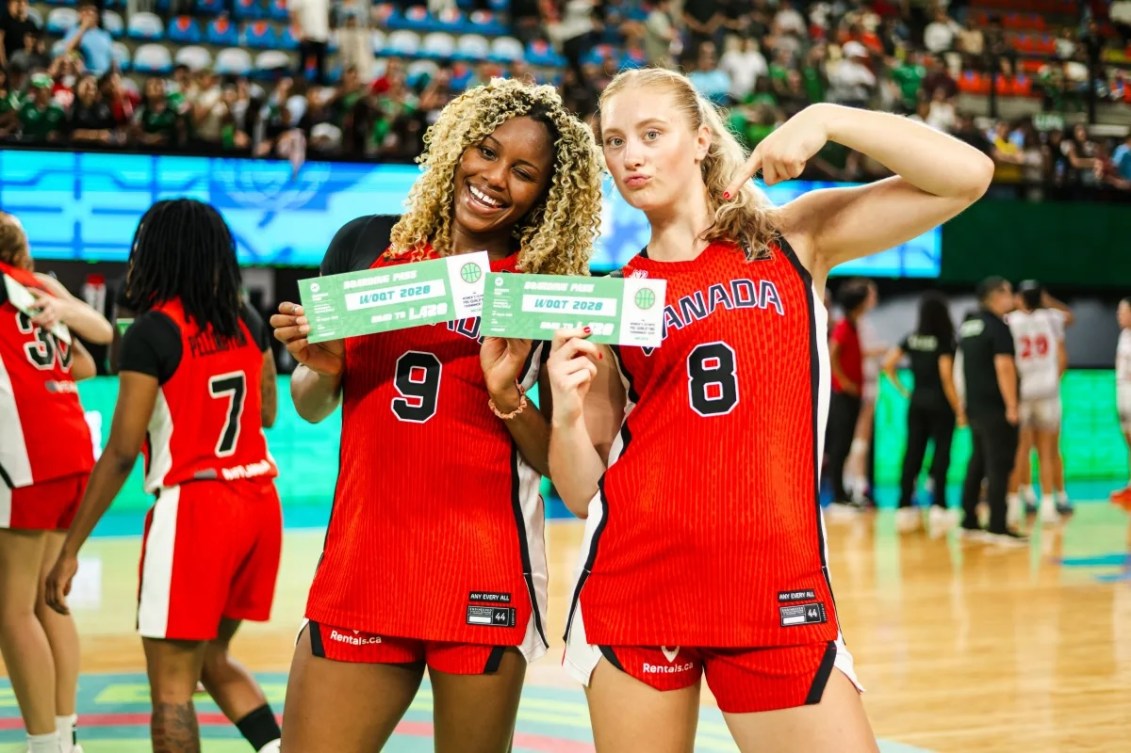
The status of Canada’s Olympic hopes were put into question earlier in the year after they failed to qualify for the FIBA 2026 World Cup where the winner will secure the first Olympic quota spot.
Canada was FIBA’s highest-ranked team not to qualify for the World Cup after going 2-3 in February’s qualifying tournament, and missing the elimination round entirely.
However, Canada still had a chance to sneak into qualifications through the Olympic pre-qualifying tournament – and had the services of a group of young stars who are in the offseason portion of the college basketball calendar.
It became clear that Canada was in a class of its own, as they ran the table, winning all five of their games by an average margin of 22.6 points.
On Sunday, fans in Guadalajara were hoping for revenge after Canada had squeaked out a victory over Mexico three days earlier in the group phase.
Neither revenge or even a close game were in Canada’s plans.
The stadium grew quiet with minutes as Canada jumped out to an early double-digit lead. They closed the quarter on a 13-4 run, and then grew the lead to 20 just over halfway through the second quarter.
National team veteran Kayla Alexander impacted the game early, converting on lay-ups, and being active in the middle of the paint on defence.
University of South Carolina star Agot Makeer also contributed with a few buckets from the mid-range to grow the lead.
In the first Canada vs. Mexico showdown, the hosts stayed in the game largely thanks to their perimeter shooting, as they knocked down 10 of their 32 attempts from three.
In the final, Canada’s perimeter defence held Mexico to five three point makes, and just 31 per cent shooting from the field overall.
They opened the lead up to 33 points in the second half, and won by a score of 83-53 when the final buzzer sounded.
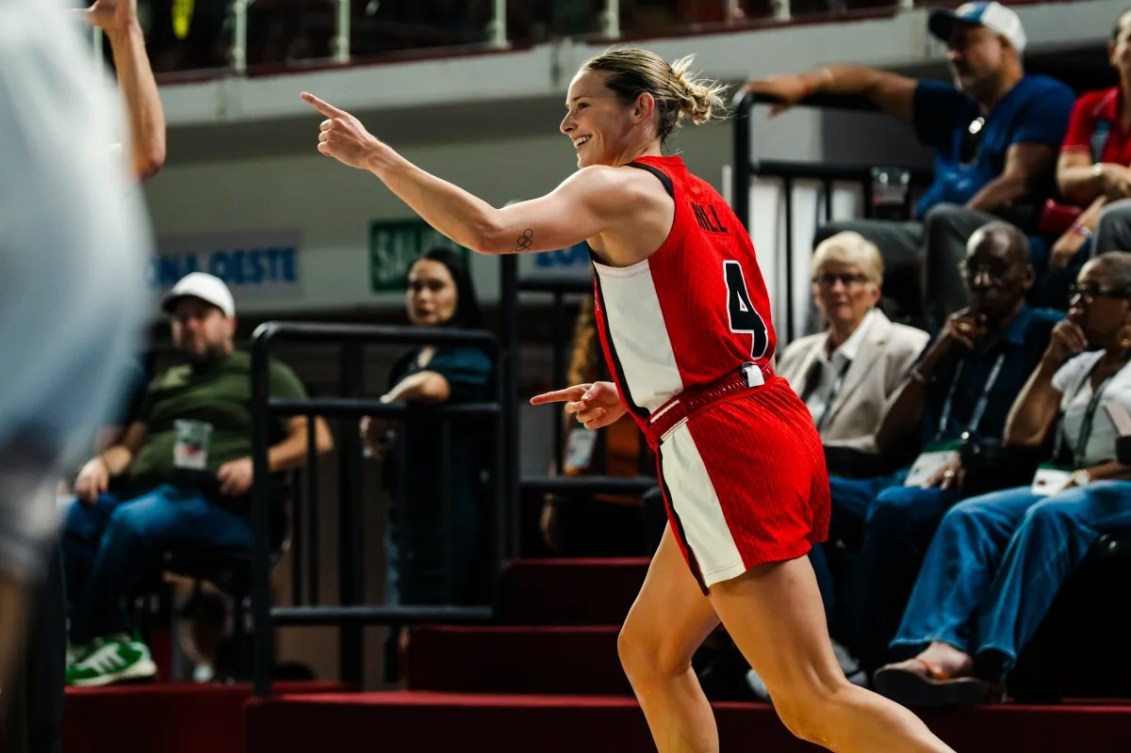
Alexander led the way with 14 points, four rebounds, and two blocks. Yvonne Ejim scored in double figures but made her biggest impact on the glass. She pulled down 17 rebounds and added 10 points.
The FIBA Women’s Olympic Qualifying Tournaments will consist of four tournaments of four teams, and will take place from February 10-13, 2028.
Canada cruises versus New Zealand in the semifinal
Canada advanced on Saturday night after cruising to an 86-71 win against New Zealand. They are undefeated in all four of their games, and have won three of the four by double digits.
On Saturday night, Canada used a 16-2 run in the second quarter to separate from New Zealand and held the lead right through to the final buzzer.
Canada was outscored by 11 points in the second half, but had grown the lead to 30 at the start of the third.
Four Canadian guards scored in double digits: Syla Swords (17), Delaney Gibb (17), Jasmine Bascoe (15), and Agot Makeer (11) led the way offensively.
Canada scored 57 first half points, the most of any team in one half at this tournament. Defensively, Canada held New Zealand to 42.4 per cent shooting.
The FIBA pre-qualifying tournament provides the eight national teams that failed to qualify for the 2026 FIBA World Cup with another opportunity for an Olympic berth.
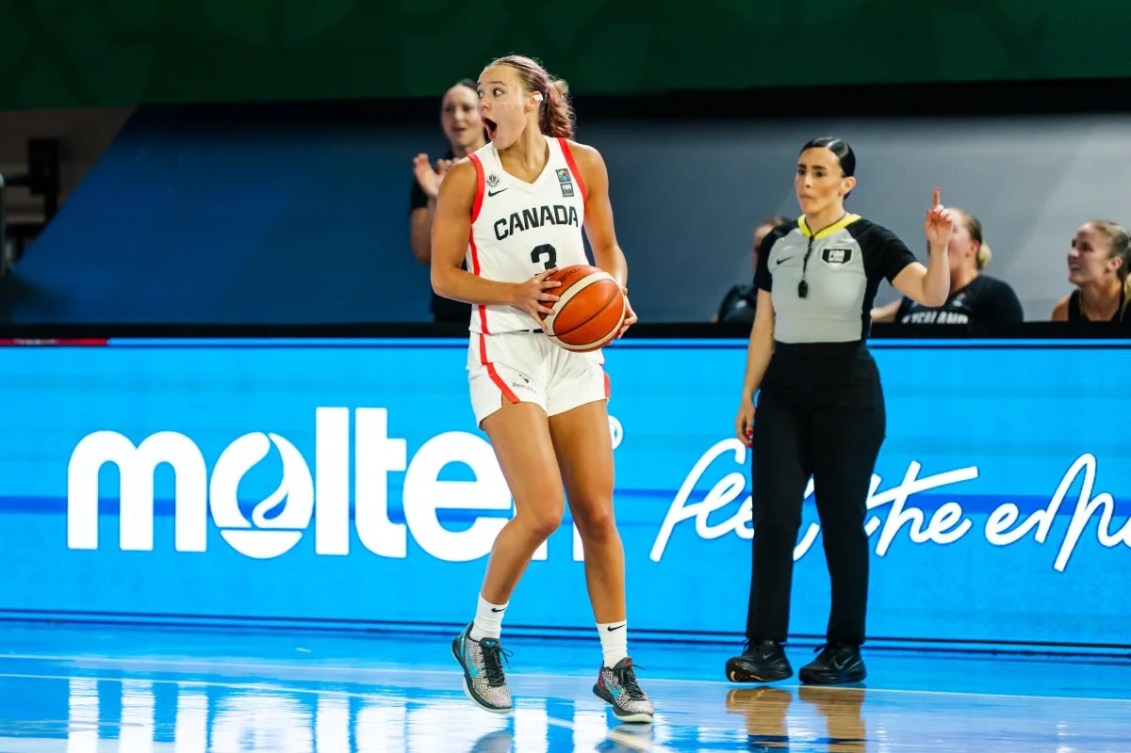
Canada will await the winner of Mexico and Brazil in the other semifinal. Canada handed Mexico their only loss, 70-64 in the final game of the group phase. Brazil won their group despite losing to South Sudan 63-61 in their tournament opener.
Canada sweeps group phase, including win over host Mexico
Canada was the lone team to go 3-0 in the group phase with wins over Senegal, Philippines, and Mexico.
With the WNBA season ongoing Canada is being led by a group of young guards, each of which have made a name for themselves playing Division I NCAA basketball in the U.S.
In Canada’s 72-57 win over Senegal, Delaney Gibb came off the bench, scored 13 points, and added three assists and two steals.
Gibb, 20, is already one of the best young scorers in college basketball. She has averaged 17.8 points per game in her two seasons with Brigham Young.
Leading the way versus Senegal was Kayla Alexander who scored 17. Alexander, a centre, was a part of the national team in Canada’s two most recent visits to the Olympic Games.
On Wednesday, Canada routed the Philippines 85-38. Syla Swords was the leading scorer with 15 points.
Swords, 20, is going into her third year at the University of Michigan and is regarded as one of the NCAA’s premier guards. Through four games, she is Canada’s leading scorer at 15.5 points per game.
All 12 Canadians who saw time on the floor scored in this match-up.
Finally, Canada faced their first challenge after battling to a gritty 70-64 win over the host nation Mexico.
Guard Jasmine Bascoe – another standout guard currently playing at Villanova University – posted her best game of the tournament, scoring 17 points and carrying the load offensively in the first half. Swords also added 17 points and had nine rebounds.
With the game tight late, Yvonne Ejim hit a clutch three with 3:31 remaining to grow Canada’s lead to seven and they would not look back.
PakarPBN
A Private Blog Network (PBN) is a collection of websites that are controlled by a single individual or organization and used primarily to build backlinks to a “money site” in order to influence its ranking in search engines such as Google. The core idea behind a PBN is based on the importance of backlinks in Google’s ranking algorithm. Since Google views backlinks as signals of authority and trust, some website owners attempt to artificially create these signals through a controlled network of sites.
In a typical PBN setup, the owner acquires expired or aged domains that already have existing authority, backlinks, and history. These domains are rebuilt with new content and hosted separately, often using different IP addresses, hosting providers, themes, and ownership details to make them appear unrelated. Within the content published on these sites, links are strategically placed that point to the main website the owner wants to rank higher. By doing this, the owner attempts to pass link equity (also known as “link juice”) from the PBN sites to the target website.
The purpose of a PBN is to give the impression that the target website is naturally earning links from multiple independent sources. If done effectively, this can temporarily improve keyword rankings, increase organic visibility, and drive more traffic from search results.
Streaming Film
Nonton Film gratis
Jasa Backlink
Download Anime Batch
Comments are closed, but trackbacks and pingbacks are open.